
Wood is a powerful material that, when properly managed, offers numerous benefits as a renewable resource and carbon sink. Responsibly sourced wood supports biodiversity by encouraging diverse forest management practices, which help protect watersheds, soil health, and wildlife habitats.
As a sustainable wood products manufacturer, we have a responsibility to intentionally source from lumber producers that promote the ecological health of our rural and urban forests and their surrounding communities.
The Ecosystem Health impact area of the Common Materials Framework focuses on the impact a product’s life cycle has on the environment during material harvesting, manufacturing, and product use.
Urban & Invasive Species Recovery
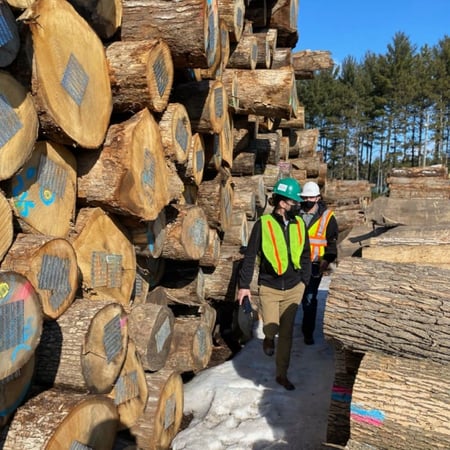
Urban wood is a broad term for wood salvaged from trees removed for reasons other than lumber production. These removals often result from disease, storm damage, hazard mitigation, or development. At Urban Evolutions, we partner with municipalities and arborists to salvage these trees, diverting them from municipal waste streams.
This service is especially crucial with the spread of the Emerald Ash Borer, an invasive beetle that has devastated the urban ash tree population, creating an immense amount of potential wood waste. Salvaging these trees reduces disposal fees and generates income for municipal forestry departments, allowing them to put more resources into caring for the existing urban forest.
Regional Species Selection
At Urban Evolutions, we have a history of sourcing materials from what is available to us. This ethos extends to our species selection, as we design products with the hardwoods species native and abundant to the Midwest region.
We invite designers to consider the aesthetic and environmental benefits of under-utilized species, such as ash or red oak, in place of in-demand woods like European white oak or riftsawn walnut. By designing with these native tree species, we invest in ecologically responsible forest management practices in our region.
Select Harvest Sourcing
In Wisconsin, we are surrounded by the abundant hardwood forests of the Midwest and recognize many small landowners and long-standing forestry operations engaging low-impact harvesting methods and targeting at-risk, mature, or diseased trees. We work directly with these local suppliers, supporting regenerative forestry practices in our region and reducing pressure on traditional commercial forests.
Habitat Restoration
Once covering 50 million acres, Oak Savanna habitats have dwindled to just 30,000 acres today. We partner with local producers who work with Wisconsin landowners to restore these vital ecosystems. Through responsible thinning practices like “daylighting the oaks,” our partners encourage native plant growth and preserve habitats for threatened species.
By supporting these efforts, we’re proud to contribute to biodiversity conservation and habitat restoration while giving removed oaks a second life in beautiful interiors.
FSC® Certified Options
The Forest Stewardship Council® (FSC) provides the most rigorous international standard for responsible forestry. FSC certified forests conserve biological diversity, water resources and crucial ecosystems.
For architects and designers pursuing LEED certification, FSC certified wood is one of the most straightforward ways to earn materials credits.
Specifically, FSC Chain of Custody certification qualifies for LEED v4 MR Credit: Building Product Disclosure and Optimization - Sourcing of Raw Materials.
At Urban Evolutions, we’ve aligned with these values since our inception and procure wood that achieves these outcomes from a variety of sources. FSC-certified wood can help project teams achieve credits in green rating systems that prioritize responsibly harvested wood.
Wood Sourcing That Supports Forest Health & Biodiversity
Every sourcing decision is an opportunity to support ecological restoration or to contribute to forest degradation. At Urban Evolutions, we choose restoration.
From salvaging urban ash trees threatened by invasive beetles to partnering with landowners restoring vanishing oak savanna habitats, our ecosystem-focused sourcing model ensures the wood in your project comes with a documented story of positive environmental impact. Whether you need FSC certified materials for LEED credits, reclaimed wood from deconstruction projects, or sustainably harvested regional hardwoods, we can help you specify materials that support both your design vision and your commitment to ecosystem health.
Have questions about sustainable wood sourcing for your project?
Contact our team to discuss habitat restoration sourcing, FSC certified options, and how our ecosystem-focused approach supports healthy forests and biodiversity.




.png?width=300&height=80&name=UE%20full%20logo%20white%20(1).png "UE full logo white (1)")